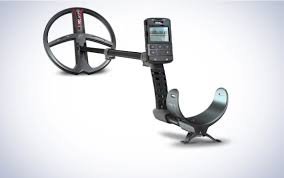
It's one of the most common questions we hear from new customers, and the honest answer is no — gold detectors and metal detectors cannot detect diamonds directly. This isn't a limitation of any specific brand or model; it comes down to basic physics, and understanding why makes it much easier to understand what these machines actually can find.
Why Metal Detectors Can't Sense Diamonds
Every metal detector, whether it's a basic VLF machine or a professional Pulse Induction gold detector, works through electromagnetic induction: the coil sends out an electromagnetic field, and conductive or ferromagnetic materials — gold, silver, copper, iron — generate a return signal the detector picks up. A diamond is a non-conductive carbon crystal. It doesn't interact with an electromagnetic field the way metal does, so no matter how sensitive or expensive the detector, there's simply no signal to detect.
What a Detector CAN Find Instead
Where people get confused is that detectorists do find diamonds in the field — but always because of the metal around them, not the stone itself. A detector responds to a diamond ring's gold or platinum band, a diamond-set pendant's metal setting, or a piece of jewelry's clasp. If you're specifically hoping to recover a lost diamond ring, a detector is genuinely useful — you're just relying on the metal, not the gem, to give you the signal.
What About Other Gemstones?
The same rule applies to essentially all natural gemstones — rubies, sapphires, emeralds, and quartz-family stones are all non-conductive and invisible to a metal detector on their own. The one partial exception some detectorists mention is certain gold-bearing quartz or mineral specimens, where a detector may respond to trace metal content within the rock rather than the gemstone material itself.
So What Should You Actually Look For?
- Lost jewelry: Rings, bracelets, and necklaces are detector-friendly because of their metal content, gemstones and all.
- Coins and relics: Straightforward conductive targets that most detectors handle well.
- Raw gold: Nuggets and flakes are metal, and are exactly what dedicated gold detectors like the Nokta Gold Kruzer are built to find.
- Not loose gemstones: A diamond, sapphire, or other stone lost on its own, without a metal setting, won't trigger any detector.
The Bottom Line
If your goal is genuinely finding diamonds as standalone stones, a metal detector is the wrong tool — no detector on the market, at any price, can do this. If your goal is recovering lost jewelry that happens to include diamonds, a good general-purpose or gold detector is exactly the right tool, because it's the metal setting doing the work.