Pakistan has more geological variety than almost anywhere a prospector can work — from the glacier-fed river gravels of Gilgit-Baltistan to the volcanic Chagai belt in western Balochistan, home to some of the world's largest known copper-gold systems. That variety means a gold detector that performs beautifully in one province can underperform badly in another if it isn't ground-balanced for the local soil.
1. The Northern River Valleys (Gilgit-Baltistan & KP) — Placer Gold Country
The Indus and its northern tributaries — the Gilgit, Hunza, and Chitral rivers — carry fine placer gold washed down from the Karakoram and Hindu Kush, and gold panning along these gravels is a centuries-old local tradition. For detector work, the challenge is wet, rounded gravel and cold, fast water rather than mineralization: small nuggets and flakes sit deep between stones, and signals are faint.
- Soil type: Water-worn river gravel and alluvial sandbars
- Main challenge: Small, deep targets with faint signals in wet ground
- Best device: A high-frequency VLF gold detector, or Pulse Induction for deeper bench gravels
- Best coil: A small, waterproof coil for target separation between stones
2. The Chagai Volcanic Belt (Balochistan) — Highly Mineralized Hard Rock
Western Balochistan's Chagai arc hosts porphyry copper-gold systems on a world scale — Reko Diq and Saindak are the famous names — and the same volcanic geology that concentrates gold also loads the ground with iron oxides. This is the most mineralized detecting environment in the country, and entry-level machines chatter constantly here.
- Soil type: Iron-rich volcanic rock and oxidized gravel plains
- Main challenge: Heavy ground mineralization causing constant false signals
- Best device: Pulse Induction, or multi-frequency VLF with precise manual ground balance
- Best coil: A DD (Double D) coil to cut through ground mineral interference
3. The Thar & Cholistan Deserts (Sindh & Punjab) — Deep, Soft Sand
Pakistan's eastern deserts are wide, soft, and brutally hot in summer. Deep dune sand absorbs signal strength noticeably, and long search days demand equipment that tolerates heat and fine dust. The reward is huge, uncrowded ground — old caravan routes and abandoned settlements included.
- Soil type: Deep, soft dune sand with low mineralization
- Main challenge: Signal loss in soft sand, extreme heat, and fine dust
- Best device: A heat-tolerant unit with long battery life and a large coil (15 inches or more)
- Best coil: A large, sealed coil for depth and wide ground coverage
4. The Potohar Plateau & Salt Range (Punjab) — Mixed Rocky Ground and Salt
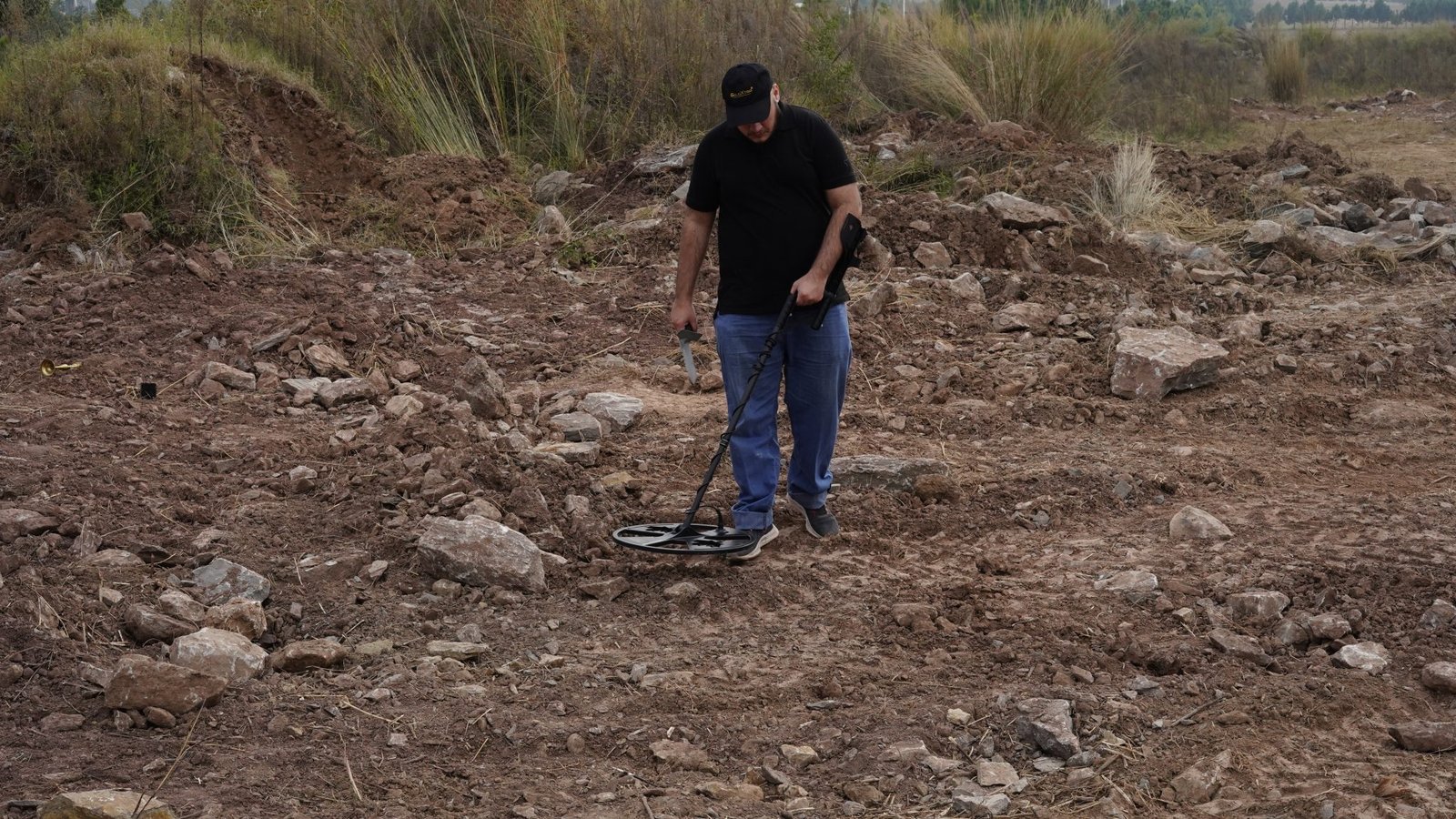
Between Islamabad and the Salt Range, the Potohar plateau mixes loess, gravel beds, and eroded rocky outcrops — and near Khewra's salt formations, conductive salty ground adds its own signal drift, much like beach detecting. This region is popular for coin and relic hunting given its long settlement history.
- Soil type: Loess and gravel with salt-affected pockets near the Salt Range
- Main challenge: Salt conductivity causing signal drift and unstable threshold
- Best device: Multi-frequency units with automatic ground tracking
- Best coil: A mid-size DD coil balancing stability and coverage
5. Rules and Regulations for Prospecting in Pakistan
Before starting any prospecting activity, make sure you understand the rules that apply — mining and exploration are regulated at the provincial level in Pakistan. See our full breakdown in "Are Metal Detectors Legal in Pakistan?" for the complete picture, including how the Antiquities Act 1975 applies:
- Protected archaeological and heritage sites are strictly off-limits — searching them is illegal under antiquities law and carries serious penalties
- Military, border, and other restricted zones are off-limits to any electronic detection device
- Commercial prospecting and mining require a licence from the relevant provincial Mines & Minerals department
- Hobbyist searching on private land requires the landowner's permission