Owning a gold detector isn't enough on its own — the right setup and search technique determine the difference between excellent results and hours wasted in the field. Many beginners make simple mistakes that leave their machine running at less than 50% of its true potential.
Step One: Preparing the Detector Before Heading Out
Correct preparation starts before you leave home, not after you've reached the search site. Make sure the battery is fully charged, check that the coil is securely attached, then test the detector on known metal objects at home to confirm it's working properly.
- Battery charge: A low battery reduces sensitivity and distorts signals
- Coil check: Make sure the coil cable is wound correctly with no breaks
- Initial test: Sweep the detector over a known gold or metal piece to confirm response
Step Two: Ground Balancing On-Site
Ground Balance is the single most important setting on a gold detector, especially in mineral-rich soil. It must be set directly at your search location rather than somewhere else, since ground characteristics change from one site to the next.
- Choose a clean spot free of any visible metal for ground balancing
- Move the coil slowly up and down while adjusting until the signal stabilises
- Repeat this every time you move to a new area with different ground characteristics
Step Three: Setting Sensitivity Correctly
The most common mistake among beginners is maxing out sensitivity, assuming it improves performance. In reality, sensitivity that's too high in mineralized soil floods the detector with false signals and makes real targets harder to find.
- Start at 70–80%: of maximum sensitivity as your baseline
- Raise sensitivity gradually until false signals begin to appear, then drop back one level
- In heavily mineralized ground, stable low sensitivity beats unstable high sensitivity
Step Four: Proper Sweeping Technique in the Field
How you move the coil directly affects your results. Many valuable targets are missed due to fast or uneven sweeping.
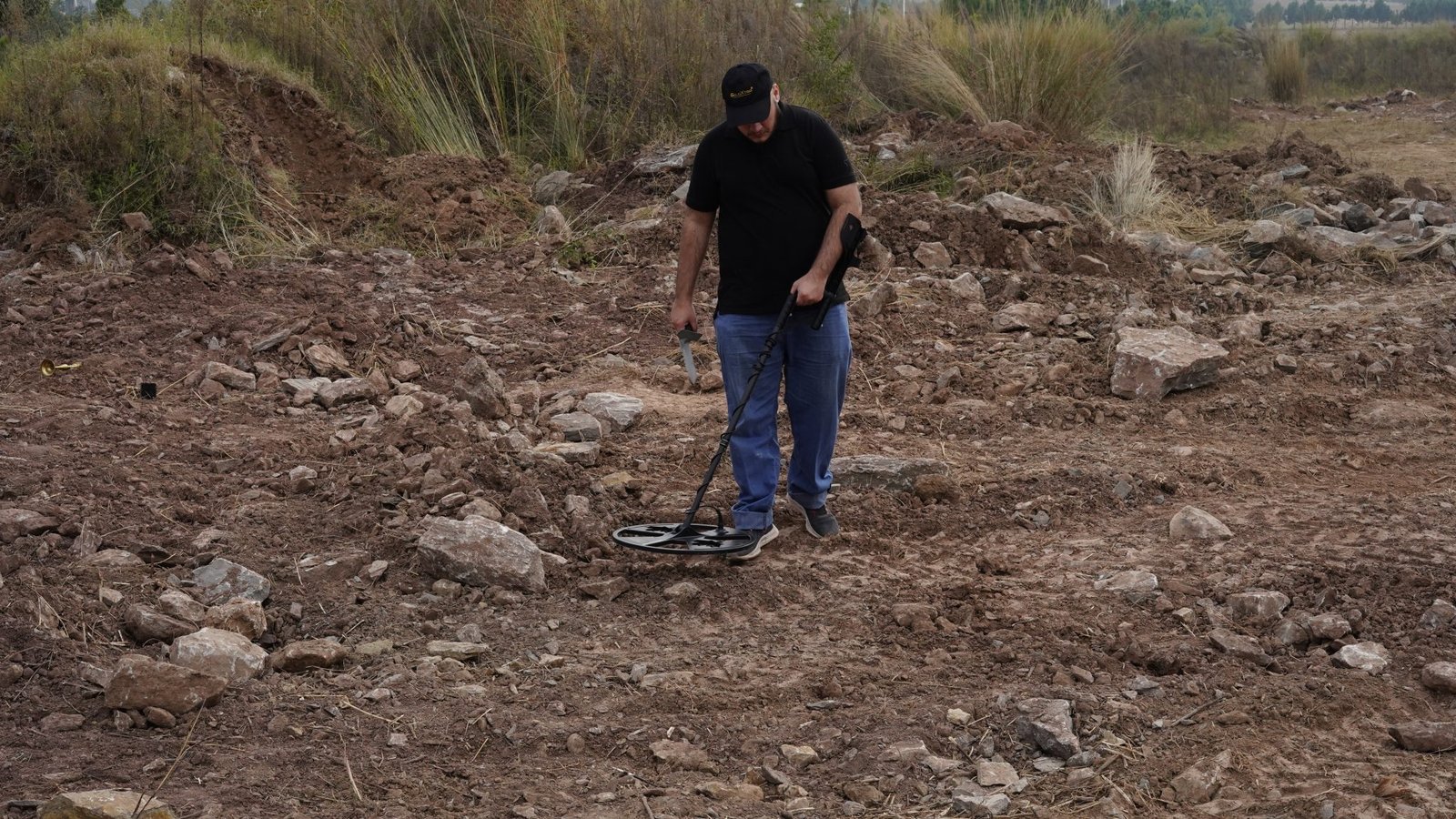
- Coil height: Keep 2–5 cm between the coil and the ground. Too high a coil loses depth, and contact with the ground increases interference.
- Sweep speed: Move at a slow, steady pace — fast movement misses small or deep targets that need more time to generate a clear signal.
- Sweep pattern: Use a grid pattern (horizontal then vertical) for suspicious areas, ensuring complete coverage and catching targets missed on the first pass.
- Overlap: Make sure each pass overlaps the previous one by 10–15 cm to avoid coverage gaps.
Step Five: Reading and Interpreting Detector Signals
Understanding what your detector is telling you is a skill gained through experience, but there are some basic rules that help you distinguish gold from iron trash:
- Stable, repeating signal: A good target. Gold, copper and silver give a consistent signal from any direction.
- Signal that varies by direction: Usually elongated iron trash such as nails and wires.
- VDI numbers (Visual Discrimination Index): Low numbers (1–25) indicate iron, mid-range (25–75) indicate copper and aluminum, and high numbers (75–99) indicate silver and larger gold pieces.
- Small raw gold: May give a low VDI reading similar to iron, because raw gold doesn't behave like refined gold — don't dismiss low signals in known gold-bearing areas.
Step Six: Digging Correctly Without Damaging the Target
Random digging damages valuable targets and makes recovery harder. Follow these steps:
- Pinpoint the centre of the signal precisely by gradually narrowing your sweep circle
- Dig a full circle around the target and lift the soil plug as a single piece
- Sweep the detector over the lifted soil plug — if it responds, the target is inside
- Use a small pinpointer to precisely locate the target within the soil
Common Mistakes to Avoid
- Ignoring weak signals: Deep gold gives a faint signal — don't dig only the strong ones.
- Not re-balancing the ground: If soil conditions change at the site while searching, rebalance immediately.
- Sweeping over yourself: Metal on your shoes and clothing causes false signals — always stay clear of the coil.
- Neglecting maintenance: Clean the coil after every use and check connections regularly.